
Fire Safety Inspection Certificate for Houses in the Philippines


Key Highlights
- A Fire Safety Inspection Certificate (FSIC) is issued by the Bureau of Fire Protection (BFP) after verifying that a building meets applicable fire safety requirements.
- Homeowners generally need an FSIC when applying for a Certificate of Occupancy for a newly constructed or renovated house.
- Requirements may include a building permit, Certificate of Completion, as-built plans, and other supporting documents.
- The BFP Citizen's Charter lists a three-working-day processing period for qualifying simple transactions, including single-dwelling residential buildings with up to three storeys and a floor area not exceeding 1,500 sqm.
- FSIC fees depend on the applicable Fire Code fee assessment. There is no single fixed nationwide amount for every residential property.
- Working with a design-build firm like Pencil Design Studio can make the process more manageable. Through its project management services, Pencil also helps coordinate the necessary permits and documentation for construction and renovation projects.
Before you and your family can officially move into your newly constructed house, you also need to make sure that the property meets the necessary safety requirements.
One important part of this process is securing a Fire Safety Inspection Certificate (FSIC) from the Bureau of Fire Protection (BFP).
The FSIC confirms that your house has passed the required fire safety inspection. It is also one of the documents needed when applying for a Certificate of Occupancy from your local Office of the Building Official (OBO).
If you're building a new home, renovating an existing property, or preparing your house for occupancy, understanding the FSIC process can help you avoid unnecessary delays.
In this guide, we'll cover the FSIC requirements, application process, costs, and timeline for residential properties in the Philippines. We'll also explain how Pencil Design Studio helps coordinate permits and documentation through our construction and renovation services.
What Is a Fire Safety Inspection Certificate (FSIC)?
A Fire Safety Inspection Certificate (FSIC) is an official document issued by the Bureau of Fire Protection (BFP) after determining that a building or structure complies with the applicable fire safety requirements under the Fire Code of the Philippines (Republic Act No. 9514) and its Revised Implementing Rules and Regulations.
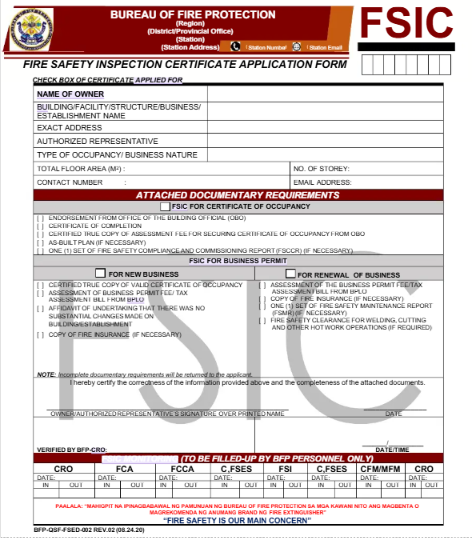
For residential construction, the FSIC helps verify that the completed house has the necessary fire safety features and that its construction follows the approved plans and applicable standards.
The certificate is generally required before the Office of the Building Official can issue a Certificate of Occupancy.
Is an FSIC Required for a Residential House?
Yes, an FSIC is generally required when securing a Certificate of Occupancy for a newly constructed residential building.
It is important to distinguish between a new house and an existing occupied home.
For a newly built house, the BFP conducts the required inspection as part of the occupancy process. If your house has undergone major renovations, alterations, or modifications, additional fire safety evaluation and inspection requirements may also apply.
However, this does not mean that every existing single-family home needs to apply for a new FSIC every year.
The specific requirements depend on the nature of the construction or renovation and the permits being processed.
FSIC Requirements for Residential Houses in the Philippines
If you're applying for an FSIC for a newly constructed house, you will need to prepare documents showing that the construction has been completed and that the property complies with the approved building plans.
The following are common documentary requirements for an FSIC application for occupancy:
Pencil Design Studio can help coordinate the required documents and permits as part of our construction and renovation services.
Some BFP offices may also require an endorsement from the OBO or additional supporting documents.
For example, the BFP's Fire Safety Guidelines on Different Types of Occupancy include an occupancy application checklist covering the OBO endorsement, Certificate of Completion, assessment of fees, as-built plans (if necessary), and FSCCR (if necessary).
You can also refer to the BFP Citizen's Charter for its published service requirements and processing standards.
Important: Requirements may differ depending on your local BFP office, the size of your house, the number of storeys, and the type of construction. Contact your local fire station before submitting your application to confirm the latest checklist.
What If You're Building a New House?
If you're still in the planning or construction stage, it's best to consider fire safety requirements before construction begins.
Your architect and engineers should account for applicable fire safety provisions when preparing the architectural, electrical, and other building plans.
This helps prevent costly revisions once construction is complete.
For homeowners working with a design-build firm, having the design and construction teams coordinate these requirements can make the permitting and inspection process more manageable.
Read our guide on Architect vs. Contractor: Who Do You Actually Need for Your Home Project? to understand the professionals involved in planning and building your house.
How to Get a Fire Safety Inspection Certificate for Your House
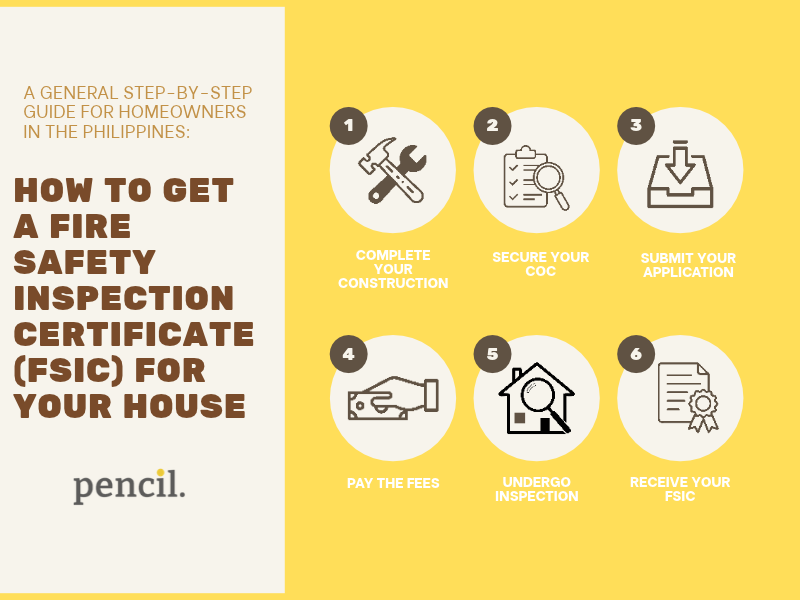
Once your house is completed, you can begin preparing the documents for your FSIC application.
Here is a general step-by-step guide for homeowners in the Philippines.
Step 1: Complete Your House Construction
Before applying for an FSIC for occupancy, your house should be substantially completed and ready for inspection. Make sure that the construction follows the approved building plans and that the required fire safety features are properly installed.
If there were changes during construction, coordinate with your architect or engineer to prepare the necessary as-built plans.
Step 2: Secure Your Certificate of Completion
Coordinate with your local Office of the Building Official (OBO) to complete the requirements for your Certificate of Completion.
The OBO may need to conduct a final inspection to verify that the house was constructed according to the approved plans and applicable building regulations. You may also need to secure the assessment of fees for your Certificate of Occupancy.
For additional guidance, check the TIEZA documentary requirements for a Certificate of Occupancy, which provide an example of the supporting documents required in the occupancy process. We also have a summarized guide for the Certificate of Occupancy.
Step 3: Submit Your FSIC Application
Submit your completed application and supporting documents to the appropriate BFP office.
Depending on your location, applications may be processed directly through the local fire station, through a one-stop shop for construction permits, or through the BFP's online Fire Safety Inspection System.
Make sure that all documents are complete to avoid delays in processing.
Step 4: Pay the Applicable Fire Code Fees
After reviewing your application, the BFP will assess the applicable Fire Code fees. You will receive an assessment or order of payment indicating the amount you need to pay. The actual amount depends on the applicable fee schedule and assessment for your property.
Step 5: Undergo the Fire Safety Inspection
A BFP Fire Safety Inspector will conduct an inspection of your house.
The inspection checks whether the applicable fire safety provisions have been properly implemented.
Depending on the property, these may include:
- Safe and accessible exits and escape routes
- Proper installation and condition of electrical systems
- Appropriate fire protection equipment
- Safe placement and handling of LPG cylinders and other combustible materials
- Compliance of applicable fire protection systems with approved plans
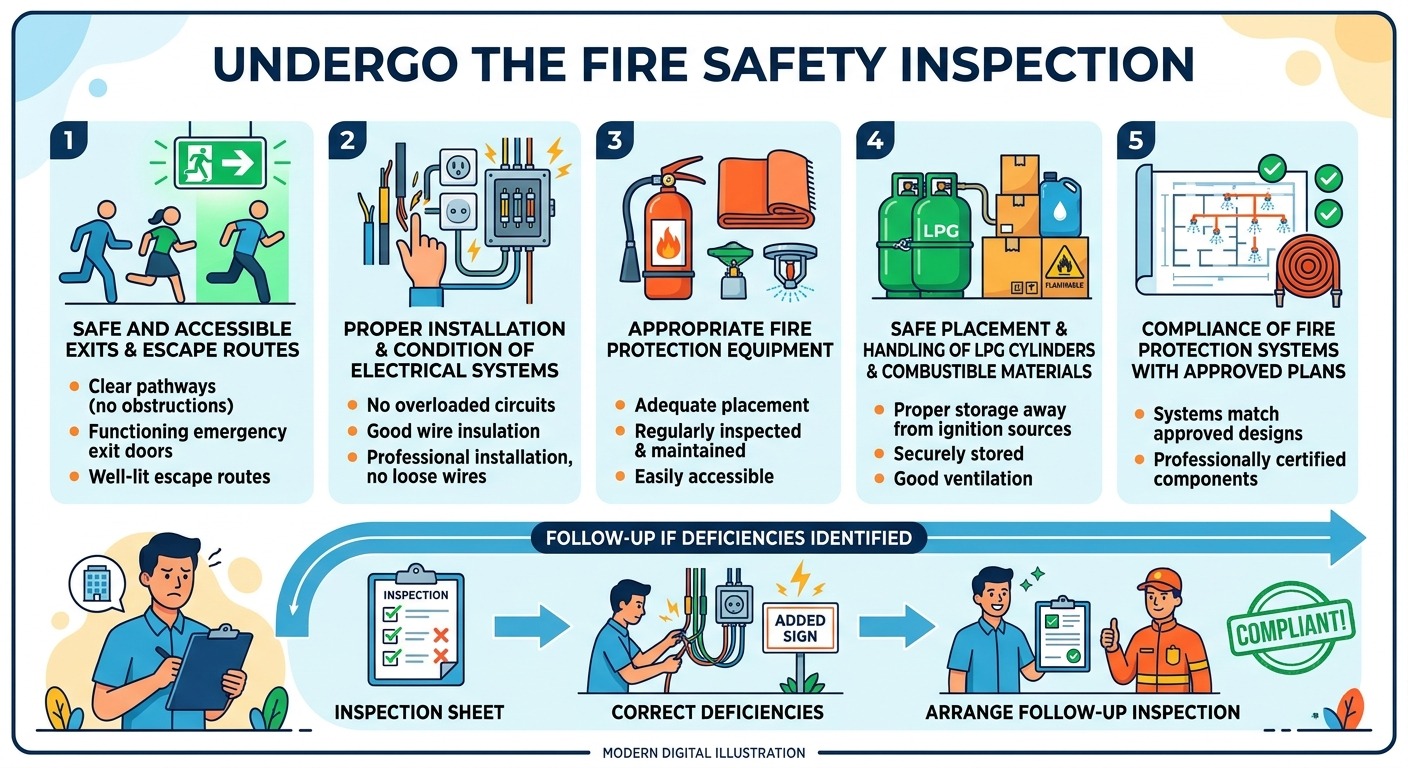
If the inspector identifies deficiencies, you may need to correct them and arrange a follow-up inspection.
Step 6: Receive Your FSIC
Once your application is approved and your house passes the required inspection, the BFP can issue your Fire Safety Inspection Certificate.
You can then proceed with the remaining requirements for your Certificate of Occupancy through the OBO.
Keep a copy of your FSIC together with your other building and occupancy documents.
How Much Does an FSIC Cost in the Philippines?
The cost of an FSIC for a residential house depends on the applicable Fire Code fee schedule and the assessment made by the local BFP office.
Unlike a fixed professional service fee, the amount is not necessarily the same for every residential property.
Factors that may affect the assessment include:
- Type of building or occupancy
- Floor area
- Applicable Fire Code fee classification
- Nature of the application
- Other applicable fees under the local permitting process
For example, some local government Citizen's Charters publish their own fee computation or minimum charges for FSIC applications. These local figures should not be treated as a universal rate for all homeowners in the Philippines.
Is the FSIC Fee Included in the Building Permit?
Not necessarily.
The Fire Safety Evaluation Clearance (FSEC), which is processed during the building permit stage, and the Fire Safety Inspection Certificate (FSIC), which is processed for occupancy, are different documents.
Their applicable fees are assessed according to the relevant stages and requirements of the permitting process.
When preparing your house construction budget, set aside an allowance for fire safety clearances, inspections, and other government permit fees.
How Long Does It Take to Get an FSIC?
The processing time depends on the classification of your application, the completeness of your documents, and the inspection schedule of your local BFP office.
According to the BFP Citizen's Charter, the FSIC application for occupancy of a qualifying single-dwelling residential building is classified as a simple transaction.
This classification covers:
- Single-dwelling residential buildings with no more than three storeys
- Floor areas not exceeding 1,500 square meters
For these qualifying applications, the published processing time is three working days.
However, this processing period should not be confused with the entire time needed to prepare your documents, arrange inspections, correct deficiencies, and complete your Certificate of Occupancy application.
For other transactions, the BFP's published service standards also identify longer processing periods for complex and highly technical applications.
What Can Delay Your FSIC Application?
Even if your application falls under the simple transaction category, certain issues may affect your actual completion date.
Common reasons include:
- Incomplete documents: Missing plans, completion certificates, or other supporting documents can delay evaluation.
- Changes to approved plans: Modifications made during construction may require updated as-built plans and further evaluation.
- Failed inspection: Identified fire safety deficiencies must be corrected before approval.
- Additional fire protection requirements: Properties with more complex fire protection systems may require additional documentation and testing.
- Inspection scheduling: The availability of the assigned inspector may affect when the physical inspection takes place.
To avoid unnecessary delays, coordinate with your architect, contractor, and local BFP office before your house reaches the final construction stage.
For more information about coordinating construction activities and requirements, read our guide on the Design-Build Timeline: What to Expect When You're Not On-Site.
Fire Safety Requirements Homeowners Should Consider Before Moving In
Getting an FSIC is not just about completing another government requirement. It is also an opportunity to make sure that your home has been designed and built with your family's safety in mind.
Here are some important fire safety considerations for residential properties.
1. Plan Safe Exit Routes
Every home should have clear and accessible ways to exit during an emergency. Avoid placing permanent furniture, storage cabinets, or other obstructions along important pathways.
For multi-storey homes, pay particular attention to stairways, corridors, and access to exits.
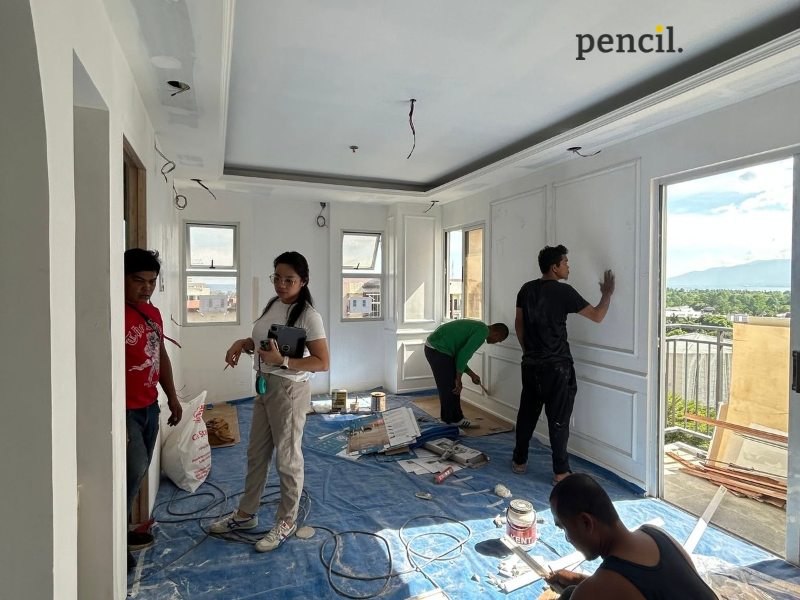
An architect can help plan these routes during the design stage, ensuring that hallways, stairways, doorways, and exits are properly positioned and easy to access in an emergency.
2. Check Your Electrical Installation
Electrical problems are a potential source of residential fires.
Make sure that your electrical system follows the approved plans and applicable standards. Avoid overloaded outlets, exposed wiring, and improperly installed electrical connections.
Have electrical installations checked by qualified professionals.
3. Practice Proper LPG Safety
If your household uses LPG for cooking, make sure that the cylinders, regulators, and connections are properly installed and maintained. Keep LPG cylinders in an appropriate, well-ventilated location away from potential ignition sources, following applicable safety requirements.
4. Consider Installing Smoke Alarms
Smoke alarms can provide an early warning when smoke is detected, giving your family more time to respond and evacuate.
Consider installing them in appropriate areas of your house, particularly near sleeping areas and along important circulation spaces.
5. Keep Fire Extinguishers Accessible
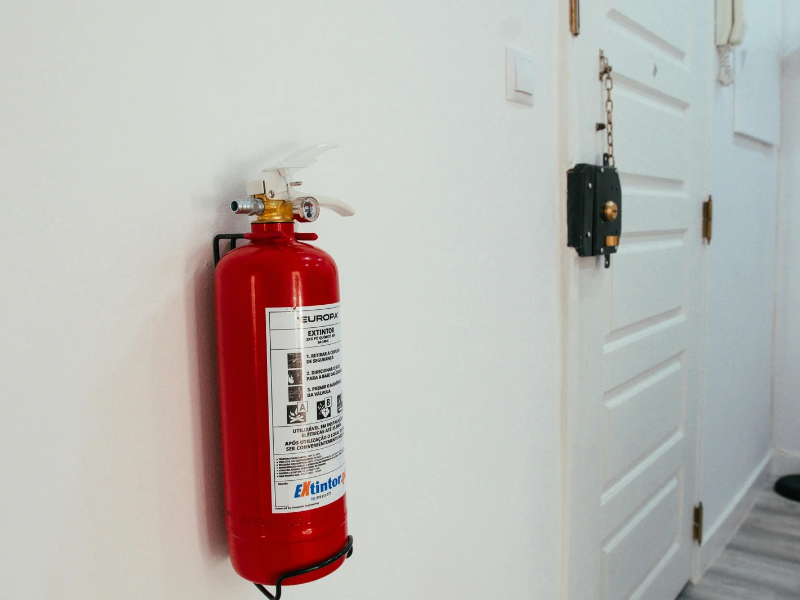
Not mandatory, but a properly selected and maintained fire extinguisher can help address small fires during their early stages. Choose the appropriate type for the potential fire hazards in your home, and make sure household members know how to use it.
These are practical home safety recommendations. The exact equipment and installation requirements for your property should be confirmed with the BFP and your design professionals.
For another important aspect of residential safety, explore our guide on How to Check if Your Residential Building in the Philippines Is Earthquake Resistant.
FSIC vs. FSEC: What's the Difference?
Homeowners sometimes confuse the Fire Safety Evaluation Clearance (FSEC) with the Fire Safety Inspection Certificate (FSIC).
Although both are issued through the BFP, they serve different purposes and are required at different stages of a construction project.
In simple terms: The FSEC focuses on your house plans before construction, while the FSIC confirms that the completed property meets the applicable fire safety requirements.
Both are important parts of the fire safety compliance process for a newly constructed house.
Make Fire Safety Part of Your Home's Design
A home is one of the biggest investments you'll make for your family. Beyond its appearance and functionality, it should also provide a safe environment where everyone can feel comfortable and protected.
That's why fire safety should be considered from the earliest stages of planning, not just when your house is ready for occupancy.
Want a stress-free home-building experience in the Philippines?
Pencil Design Studio might be just the partner you're looking for. Let us guide you through every step of your home construction journey.
Talk to us and let us know your vision for your dream home!
Frequently Asked Questions (FAQs)
More Great Resources For You


More Great Resources For You
Let’s build your dream home now, shall we?
We guarantee you that we won’t rest until your dream home has come to life.
